Inside a Casting Foundry: The Soul of Metal Manufacturing
Inside a metal casting facility, operations take place that are essential to the manufacturing of metals. Melting furnaces convert alloys into molten states, while experienced technicians oversee complex molding systems. Automated systems serve a critical function, detailed resource enhancing efficiency and sustainability. Yet, the industry faces numerous challenges that could impact its future. Understanding these dynamics reveals more than just production; it illuminates a intricate relationship of tradition and innovation. What awaits for this essential industry?
The Essentials of Metal Casting
Metal casting functions as a foundational process in industrial production, transforming liquid metal into solid forms. This technique has been employed for centuries, enabling artisans and manufacturers to produce components with complex shapes and accurate dimensions. The process begins with selecting suitable metal alloys, which are subsequently melted at elevated temperatures.
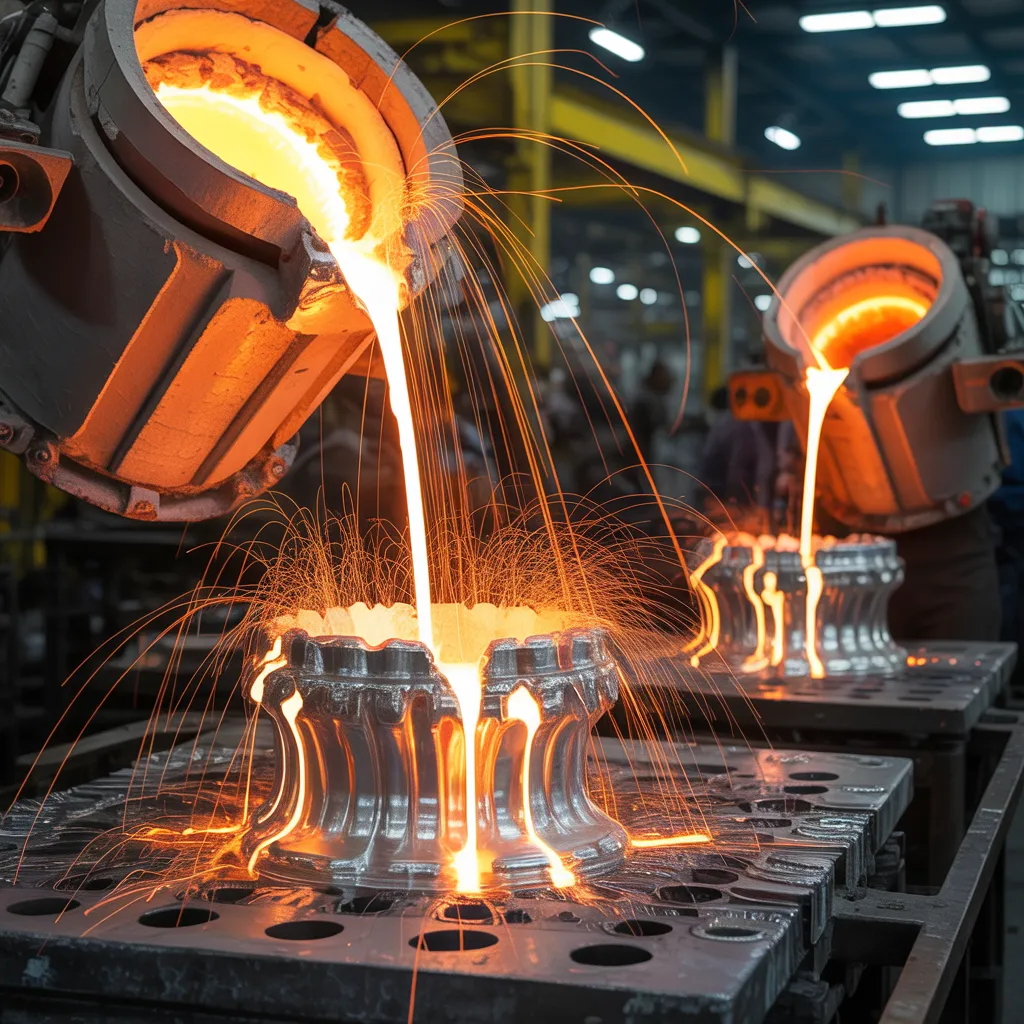
When molten, the metal is poured into molds designed to shape the final product. These casting molds can be made from a range of materials, including ceramic, sand, and metal, based on the necessary specifications and manufacturing volume.
Once the metal has cooled and solidified, the mold is taken away, uncovering the cast object. This method provides considerable advantages, such as reduced material waste and the ability to produce complex geometries that would be challenging to achieve through alternative manufacturing methods. Grasping these fundamentals is vital for appreciating the value of metal casting in contemporary manufacturing.
Essential Processes in Metal Casting: Melting, Molding, and Refinement
The journey of metal casting encompasses three fundamental steps: melting, shaping, and refinement. Initially, raw metal is subjected to intense furnace heat until it becomes fully molten, allowing for easier manipulation. The melting process is a critical step, as it directly influences the quality of the end result.
Next, the liquid metal is cast into casting molds, which form it into defined shapes. The selection of molding material—including options such as ceramic, sand, or metal—impacts the cast piece's surface finish and dimensional accuracy.
Finally, refinement encompasses cooling and solidifying the cast metal, accompanied by procedures including machining, polishing, or heat treatment to improve its mechanical characteristics. This step confirms the finished product satisfies strict quality standards and precise specifications. Every one of these steps is vital, playing a role in the overall performance and success of metal casting, ultimately leading to premium-grade components across multiple industries.
Breakthroughs in Today's Foundry Industry
As the foundry sector advances, breakthroughs are redefining established processes, boosting performance and eco-conscious operations. Technological progress, like 3D printing, are revolutionizing mold production, allowing for complex designs and reduced lead times. This technique not only cuts down on waste but also promotes personalization, addressing individual client requirements with greater precision.
In addition, the implementation of robotic automation streamlines production processes, improving operational efficiency and lowering human error rates. Intelligent manufacturing systems, including IoT-enabled sensors, offer real-time data analytics, facilitating precise monitoring of operations and predictive maintenance.
Moreover, green materials and techniques are increasingly being adopted, minimizing the impact on the environment of foundry operations. The utilization of repurposed metals and energy-saving smelting systems demonstrates a movement towards more sustainable operations, supporting worldwide environmental objectives. These developments collectively contribute to a stronger and more sustainable foundry sector, prepared to address emerging challenges while satisfying the growing requirements of the marketplace.
What Difficulties Are Casting Foundries Confronted With?
What obstacles do casting foundries encounter in an rapidly developing industry? One significant challenge is the fluctuation in raw material costs, which can greatly affect production budgets. Furthermore, environmental regulations are becoming increasingly stringent, forcing foundries to implement cleaner technologies to reduce emissions and waste. This shift requires significant capital investment, which can create financial pressure for smaller businesses.
Additionally, competition from international producers often leads to cost pressures, making it difficult for domestic foundries to maintain profitability. Foundries must also contend with keeping pace with rapid technological advancements, including automation and digitalization, which require continuous investment and workforce training.
Ultimately, supply chain disruptions, exacerbated by global events, present an ongoing risk, impacting the prompt delivery of parts and raw materials. Together, these obstacles demand casting foundries to be adaptable and forward-thinking to thrive in a demanding market landscape.
The Role of Skilled Labor in Casting Foundries
While automation and technology continue to reshape the production environment, experienced labor remains a critical pillar in metal casting facilities. The detailed demands of metal casting demands a level of expertise that machines alone cannot replicate. Skilled workers possess the expertise to analyze intricate blueprints, select appropriate materials, and resolve challenges that emerge during the production cycle. Their hands-on experience is essential for maintaining accuracy and quality standards, especially in demanding applications that require precise measurements.
Furthermore, skilled workers play a vital role in sustaining and refining machinery, confirming that production proceeds efficiently and consistently. As casting processes evolve, these professionals are also responsible for adjusting and improving methods, incorporating modern technologies while preserving classical craftsmanship. Across this progressive field, the synergy between skilled labor and technological advancements is critical for maintaining the standards and dependability that characterize thriving casting foundries.
Future Trends in Casting: What's Next for the Industry?
Emerging trends in the casting industry are ready to redefine its trajectory, driven by advancements in technology and shifting market requirements. Artificial intelligence and automation are increasingly streamlining production workflows, enhancing precision and minimizing workforce costs. In addition, the adoption of 3D printing technology is transforming mold manufacturing, facilitating more complex designs and reduced lead times.
Sustainability is emerging as a key priority as organizations work to lessen their ecological footprint. This encompasses the use of recycled materials and the adoption of energy-efficient processes across foundries. Moreover, the rising demand for lightweight materials, notably in the automotive and aerospace fields, is spurring new innovations in alloy formulation.
The industry is also witnessing a transition toward digitalization, where IoT solutions support real-time monitoring and predictive maintenance. As these advancements come together, the casting field is poised to witness substantial changes, preparing itself to handle the challenges of a rapidly changing global landscape.
Commonly Asked Questions
Which Types of Metals Are Most Frequently Cast in Foundries?
Commonly cast metals in foundries include aluminum, iron, steel, bronze, and brass. Each of these metals holds unique attributes, rendering them ideal for a wide range of applications, from vehicle components to decorative objects, reflecting the versatility of casting processes.
What Are the Environmental Impacts of Metal Casting?
The metal casting process affects the environment through emissions, energy consumption, and waste generation. It can contribute to both air and water contamination, while also consuming considerable resources, prompting the need for eco-friendly practices and technologies in the sector.
What Safety Protocols Are Established for Foundry Workers?
Foundries employ various safety precautions, including safety equipment, air circulation systems, routine training programs, and strict adherence to safety guidelines. Such protocols serve to minimize hazards and ensure a protected workplace setting for all staff members.
How Is Casting Defect Detection and Correction Performed?
Casting flaws are detected using visual inspections, dimensional checks, and non-destructive testing methods. Addressing these issues involves refining processes, correcting imperfections, or performing re-casting when required to maintain quality standards and conformance to requirements.
What Is the Typical Production Timeline for a Casting?
A standard production timeline for a casting involves multiple stages: pattern creation, pouring, mold making, finishing, and cooling. The process usually spans from a couple of days to multiple weeks, depending on complexity and production volume.